Cork as an Eco-Building Material (Portugal’s Native Advantage)
Introduction to Cork’s Unique Eco-Properties
If there’s one material that symbolizes Portugal’s harmony with nature, it’s cork. Found in everything from wine stoppers to luxury flooring, cork has now taken center stage in sustainable architecture. It’s renewable, biodegradable, and provides excellent insulation—making it a perfect fit for eco-conscious builders.
What Makes Cork a Truly Sustainable Resource
Cork isn’t just sustainable—it’s regenerative. Unlike timber, cork doesn’t require cutting down trees. Instead, the bark is gently harvested every 9 to 12 years, allowing the tree to continue growing and absorbing CO₂ throughout its life. This cycle makes cork one of the most planet-friendly resources available.
The Regenerative Harvesting Process
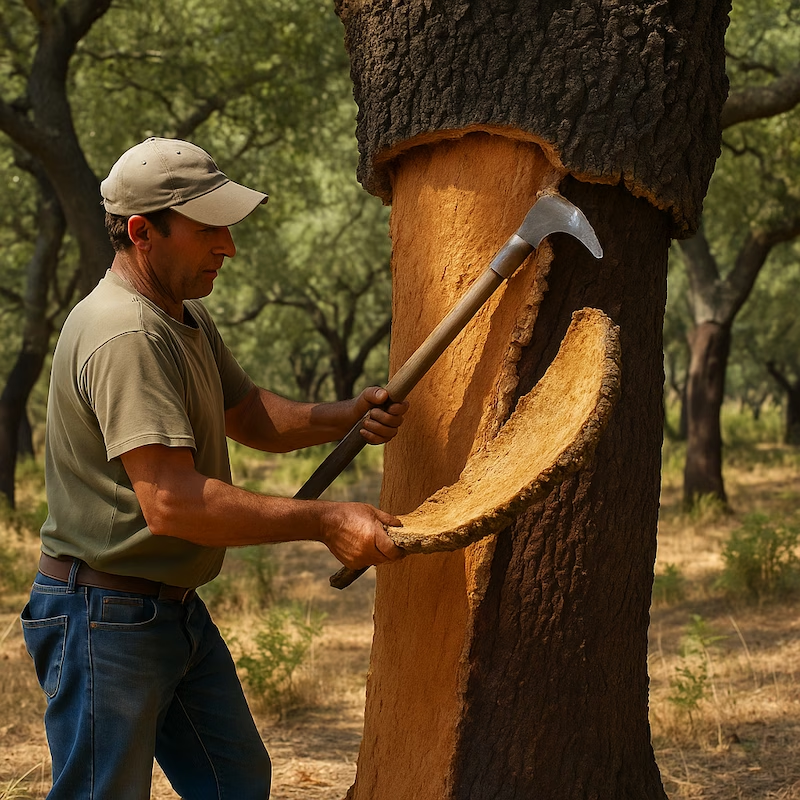
Harvesters in Portugal, known as “tiradores,” strip the bark by hand with precision, ensuring no harm to the cork oak (Quercus suber). Each tree can live over 200 years, providing multiple harvests. This regenerative cycle captures thousands of tons of carbon annually, positioning Portugal’s cork forests as crucial carbon sinks.
A Historical Overview of Cork in Portugal
Portugal’s connection with cork runs deep—both culturally and economically.
How Portugal Became the World’s Leading Cork Producer
Portugal is home to over one-third of the world’s cork forests, particularly in the Alentejo region. Thanks to its Mediterranean climate and centuries of traditional expertise, the nation produces over 70% of global cork exports. Portugal’s deep-rooted sustainability culture extends far beyond cork production. If you want a broader view of the country’s eco-friendly lifestyle, check out our article on Sustainable Living in Portugal.
Traditional Uses vs Modern Applications
While cork was once reserved for bottle stoppers, artisans and architects have reimagined its use. Today, cork panels, insulation boards, and even structural blocks are redefining eco-building aesthetics.
The Science Behind Cork’s Eco Efficiency
To understand why cork performs so well, we need to look at its microscopic structure.
Structure of Cork Cells and Natural Insulation
Each cubic centimeter of cork contains around 40 million air-filled cells. This honeycomb structure acts like natural insulation—trapping air, resisting moisture, and providing soundproofing without synthetic additives.
Thermal and Acoustic Benefits in Buildings
Cork’s ability to balance heat and sound makes it invaluable for modern homes. Walls and floors lined with cork maintain stable indoor temperatures, reducing the need for air conditioning or heating. Plus, it muffles echoes—ideal for open-space living designs.
Cork in Modern Green Architecture

Portugal’s architects are now showcasing cork as both a design feature and performance enhancer.
Applications in Walls, Floors, and Roofs
Cork panels are lightweight yet strong. Builders use them for façades, underfloor insulation, and even green roofs. The material adapts easily to curved surfaces, giving modern eco-homes a natural aesthetic.
Combining Cork with Other Natural Materials
Cork pairs perfectly with clay, lime, and recycled timber. When combined, they create breathable walls that regulate humidity—essential for Portugal’s coastal regions.
Comparing Cork with Other Eco-Building Materials
How does cork stack up against other popular green materials?
Cork vs Hempcrete, Bamboo, and Recycled Wood
While hempcrete is great for insulation, cork offers better soundproofing and moisture resistance. Bamboo, on the other hand, grows fast but requires more processing energy. Cork stands out for being naturally ready to use with minimal treatment.
Why Cork Outperforms in Humidity and Insulation
Unlike wood, cork doesn’t swell or rot easily. Its waxy suberin coating naturally repels water, making it ideal for Portugal’s coastal homes.
The Role of Cork in Passive House Design
Cork is becoming a core element in Portugal’s passive house movement.
How Cork Improves Energy Efficiency in Homes
Passive houses rely on airtight construction and high insulation. Cork’s low thermal conductivity keeps indoor spaces comfortable year-round without heavy energy use.
Case Studies of Cork-Based Passive Houses in Portugal
From the Montemor-o-Novo eco-village to Lisbon’s cork-clad townhouses, architects are proving that natural materials can meet modern efficiency standards.
Environmental and Economic Impact in Portugal
Cork’s benefits extend beyond sustainability—it sustains livelihoods too.
Cork Oak Forests (Montado) and Carbon Sequestration
Montado ecosystems not only support biodiversity but also capture up to 14 million tons of CO₂ annually. They shelter endangered species like the Iberian lynx while preserving soil health.
Rural Employment and Eco-Tourism Synergy
Cork harvesting supports over 20,000 Portuguese families. Many rural regions have turned cork tourism into an educational attraction, showcasing sustainable forestry practices.
Challenges and Misconceptions About Cork
Despite its eco-status, cork faces misconceptions.
Is Cork Expensive? Debunking Myths
While cork products may seem costly upfront, their long lifespan and energy savings outweigh the initial cost. Properly maintained cork insulation can last 50+ years.
Durability and Maintenance in Long-Term Use
Cork is resistant to pests, fire-retardant, and easy to maintain. A simple sealant application keeps surfaces protected for decades.
Cork Innovations and Future Trends
The cork industry is evolving fast with modern technology.
3D-Printed Cork Panels and Modular Systems
Researchers are experimenting with 3D-printed cork composites that can be molded into prefabricated building components—speeding up construction while reducing waste.
The Future of Cork in Circular Construction
As part of Europe’s circular economy goals, cork recycling is becoming standard practice. Old cork boards can be shredded and repurposed into new insulation or furniture.
How Homeowners Can Use Cork Sustainably
You don’t have to be an architect to benefit from cork.
Choosing Cork Products with Certified Origins
Look for FSC-certified cork products that guarantee sustainable harvesting and ethical production. Portuguese brands often highlight this certification proudly.
DIY and Renovation Tips Using Cork Materials
Cork tiles are easy to install for soundproof walls or flooring. You can also use cork rolls as underlayment to improve comfort in existing homes.
Conclusion: Why Cork Represents Portugal’s Green Identity
Cork is more than just a material—it’s a symbol of Portugal’s ecological spirit. It represents a perfect harmony between tradition and innovation, between economy and ecology. As the world seeks sustainable building solutions, Portugal’s cork stands as a quiet yet powerful answer—proving that nature, when respected, always gives back.
FAQs About Cork as a Building Material
Yes, cork’s natural suberin layer makes it highly water-resistant. When properly treated, it performs well in façades and outdoor panels.
Cork oak trees can be harvested every 9–12 years without damage, providing 15–20 harvests over their lifetime.
Absolutely. Cork doesn’t release VOCs and naturally resists mold, improving overall air quality indoors.
Yes, old cork can be ground down and reused in insulation boards, flooring, or composite materials—making it fully circular.
Portugal’s unique climate, traditional harvesting expertise, and vast cork oak forests ensure the world’s highest-quality cork with unmatched density and elasticity.