
Construction Recycling Practices: Portugal vs Asia
Introduction to Global Construction Waste
Every year, millions of tons of construction waste end up in landfills, making it one of the largest sources of environmental pollution. Construction and demolition (C&D) activities produce massive quantities of concrete, metal, wood, and plastic. As the global construction boom continues, countries like Portugal and those in Asia are being pushed to rethink how they manage and recycle this waste responsibly.
The Rising Challenge of Construction Waste
Urbanization, infrastructure expansion, and housing demands contribute to the rapid increase in construction waste. Without effective management, this waste can lead to land scarcity, pollution, and resource depletion.
Why Recycling Construction Materials Matters
Recycling construction materials helps minimize landfill use, conserve raw materials, and reduce carbon footprints. Reused aggregates and recycled concrete not only lower costs but also make construction more sustainable.
Overview of Construction Waste Management in Portugal
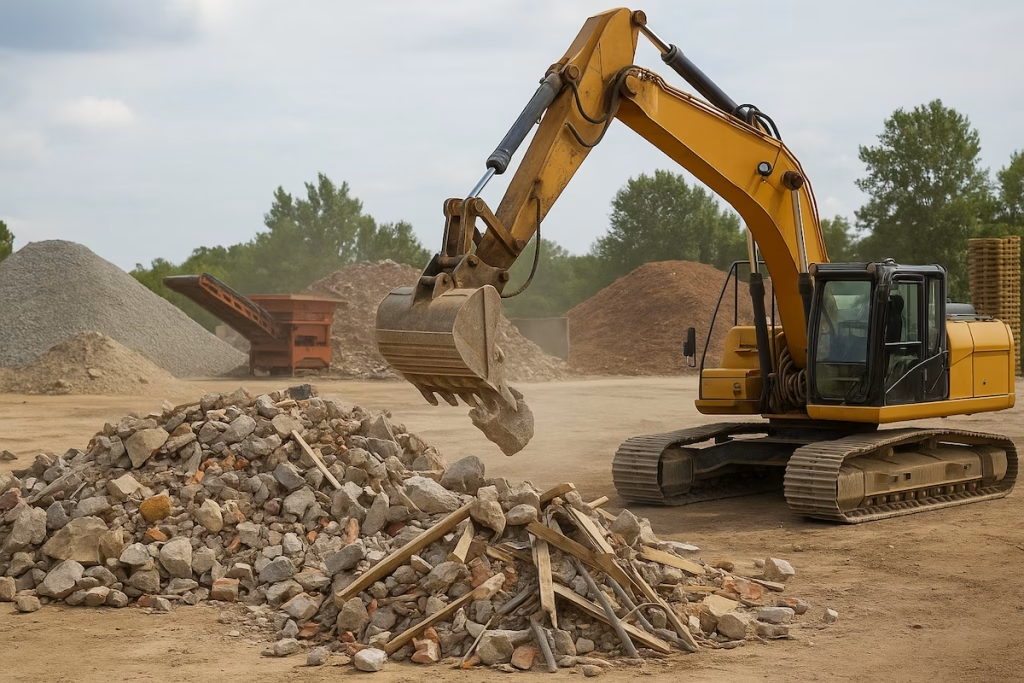
Portugal, as part of the European Union, follows stringent environmental policies that promote recycling and sustainable waste disposal.
Government Regulations and EU Directives
The EU Waste Framework Directive sets ambitious goals for member states, including recycling 70% of non-hazardous construction waste.
Portugal’s National Waste Management Plan
Portugal’s “PERSU 2030” strategy emphasizes waste prevention, recycling, and the circular economy. It aims to increase the national recycling rate while minimizing reliance on landfills.
Targets Set by the European Union
The EU’s Green Deal further motivates Portugal to adopt cleaner technologies and circular construction models, ensuring every construction project contributes to long-term sustainability.
Common Recycling Methods in Portugal
Portugal uses both traditional and advanced recycling methods.
On-site Sorting and Material Recovery
At construction sites, materials like concrete, metals, and wood are sorted immediately to ensure easy recycling later.
Recycling Facilities and Innovations
Portugal’s modern recycling plants can process debris into reusable aggregates. Some facilities use AI and robotics to sort waste automatically, increasing efficiency.
The Role of the Private Sector and Local Municipalities
Private recycling companies collaborate with municipalities to collect, process, and resell recycled materials. Public-private partnerships have accelerated innovation and reduced waste volumes.
Construction Recycling Practices Across Asia
Asia, home to both developed and developing nations, presents a diverse picture of recycling practices.
Regional Differences in Recycling Approaches
While advanced economies like Japan and Singapore lead in sustainable waste management, other countries are still developing infrastructure and policies to catch up.
Developed vs Developing Asian Nations
Developed Asian nations prioritize innovation and strict regulations, while developing countries often focus on basic collection and disposal systems due to limited budgets.
Cultural and Economic Influences on Waste Handling
In some Asian countries, informal recycling sectors dominate. Cultural habits and economic constraints shape how communities manage construction waste.
Case Studies of Leading Asian Countries
Japan’s Advanced Construction Recycling Model
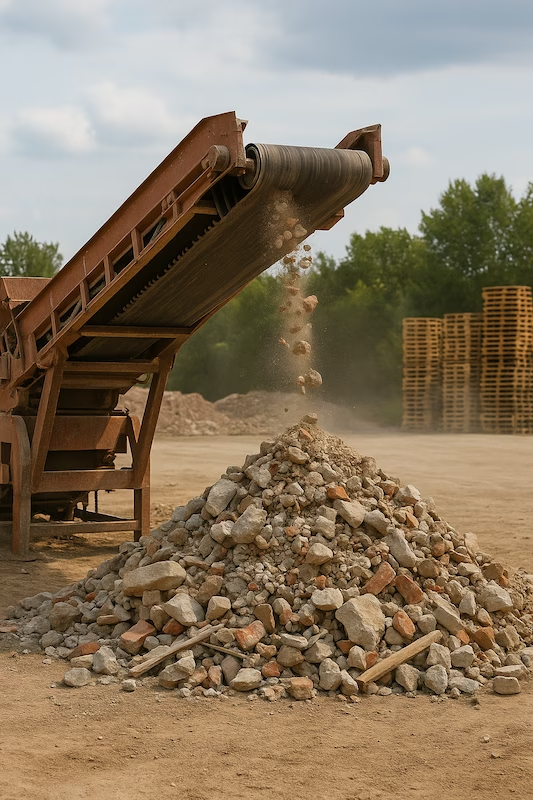
Japan recycles over 90% of its construction waste, thanks to strict legal frameworks and efficient waste separation systems.
Singapore’s Zero Waste Masterplan
Singapore’s Semakau Landfill is one of the most sustainable in the world. Through smart planning and strict enforcement, Singapore aims to achieve zero waste by 2030.
Malaysia’s Growing Focus on Sustainable Waste Disposal
Malaysia is adopting stricter waste regulations, encouraging recycling through private partnerships and public education. The use of RORO bins and sorting centers is becoming more common in major cities like Kuala Lumpur and Penang. For readers unfamiliar with RORO systems, here’s a full guide on what RORO bins are and how they’re used in construction.
Comparing Portugal and Asia: Key Differences
Let’s look at how these two regions differ in their recycling ecosystems.
Legislation and Enforcement Strength
Portugal’s EU-based legislation ensures strict compliance, while Asian countries vary widely in regulatory strength.
Recycling Technology Adoption
Portugal and Japan lead in recycling technology, while many Asian countries still rely on manual sorting methods.
Public Awareness and Participation
Public education campaigns in Portugal emphasize sustainability, whereas Asia’s participation depends heavily on economic development and urban culture.
Economic Feasibility and Incentives
Portugal offers EU funding and tax incentives, while some Asian nations struggle to attract investment for recycling infrastructure.
Lessons Portugal Can Learn from Asia
While Portugal has a strong regulatory system, Asia’s innovation and adaptability offer valuable insights.
Innovations in Smart Waste Management
Asian cities like Tokyo and Seoul use IoT sensors and AI to monitor waste flow and optimize collection systems.
Community-Based Recycling Programs
In many Asian nations, communities play a direct role in sorting and recycling waste—a model Portugal could integrate to strengthen grassroots participation.
Lessons Asia Can Learn from Portugal
Portugal’s policy-driven system can help Asian countries establish stronger national recycling frameworks.
Policy Integration with EU Sustainability Goals
Asian governments can replicate Portugal’s alignment with global sustainability goals for long-term waste reduction.
Focus on Quality Control in Recycled Materials
Portugal ensures recycled materials meet safety and durability standards—something Asia can improve for broader market acceptance.
Environmental and Economic Impacts of Effective Recycling
Reducing Landfill Dependence and Pollution
Recycling reduces the need for new landfills, preserves land, and minimizes environmental damage caused by dumping waste.
Creating New Business Opportunities in Recycling Industries
Recycling isn’t just green—it’s profitable. Companies can generate revenue by producing recycled aggregates, reprocessed metals, and upcycled construction materials.
Future Trends in Construction Recycling
Both Portugal and Asia are moving toward smarter, tech-driven waste management solutions.
Digital Transformation and AI in Waste Tracking
AI-powered waste sorting and blockchain-based waste tracking systems are set to revolutionize recycling efficiency and transparency.
Circular Economy and Sustainable Construction
The future lies in circular construction—where materials are reused and buildings are designed for deconstruction and recycling.
Conclusion
Portugal and Asia are both tackling the global waste problem from different angles. Portugal’s structured and policy-based system ensures compliance and sustainability, while Asia’s technological and community-driven innovations accelerate change. Together, they illustrate how recycling can evolve from a compliance requirement into a global environmental movement that balances economic growth with sustainability.
FAQs
Common materials include concrete, metal, glass, plastic, bricks, asphalt, and wood—all of which can be reused or repurposed.
Portugal meets the EU target of recycling about 70% of its C&D waste, while Asia varies—Japan and Singapore lead with over 80%, but others lag behind.
Technology enables automation in sorting, improves recycling efficiency, and helps monitor waste management through data-driven insights.
Challenges include limited infrastructure, funding shortages, lack of enforcement, and low public awareness.
By combining Portugal’s policy frameworks with Asia’s innovation and community engagement, other nations can create efficient, sustainable recycling systems.