
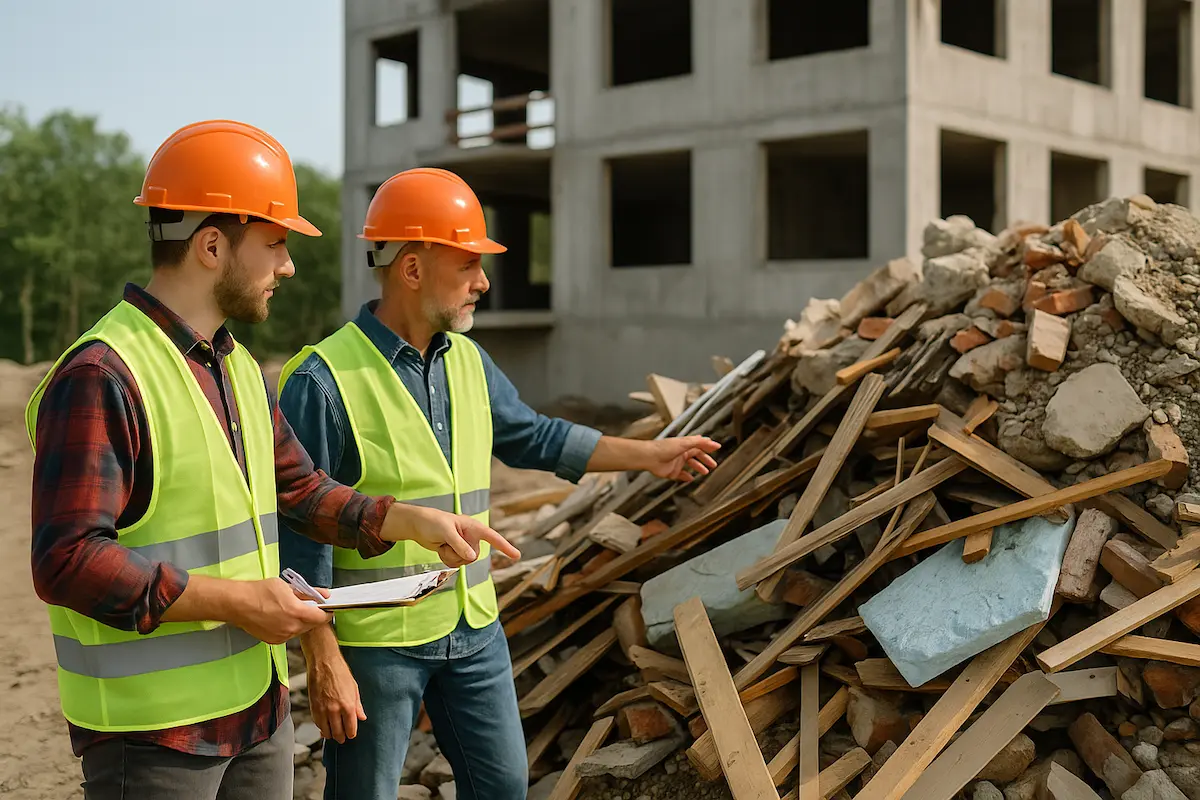
This article is part of our Global Sustainability Case Studies series, which highlights how different regions manage construction waste, recycling systems, and large-scale cleanup practices in the building industry.
Estimating Waste Volume Before You Start Building
Introduction: Why Estimating Waste Matters
Before you start any construction project, one of the most overlooked yet crucial steps is estimating how much waste your site will produce. Accurate waste estimation not only saves money but also helps you plan smarter, reduce delays, and comply with environmental standards. Think of it like mapping your route before a road trip—without it, you risk taking wrong turns, wasting time, and overspending.
Understanding Construction Waste
What Counts as Construction Waste?
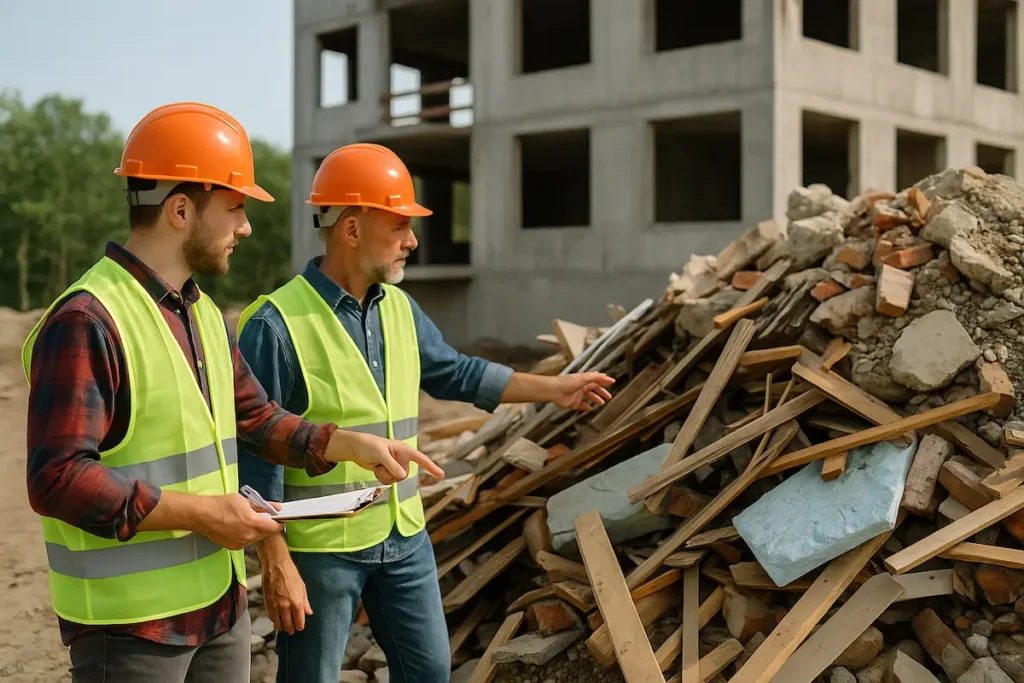
Construction waste includes all leftover materials generated during building, renovation, or demolition. This can range from broken bricks and concrete to wood scraps, metal, insulation, and even packaging materials.
Common Types of Building Waste
Typical waste categories include inert waste (like concrete, bricks, and tiles), non-inert waste (like wood and plastic), and hazardous materials (like paint or asbestos). Knowing what kind of waste your project will produce helps you decide the right disposal or recycling methods.
The Importance of Estimating Waste Volume Early
Cost Control and Budget Planning
By predicting your waste volume early, you can allocate the right budget for bins, disposal, and recycling. Without estimation, unexpected waste often leads to unplanned expenses and logistical chaos.
Compliance with Environmental Regulations
In Malaysia, proper waste forecasting aligns with national environmental guidelines. To understand the regulatory landscape, refer to our full article on Construction Waste Management in Malaysia.
Site Safety and Space Optimization
Waste piles can block access paths and create safety hazards. Accurate estimation helps you plan for proper waste storage and disposal schedules, keeping your site organized and hazard-free.
Factors That Affect Waste Generation
Project Size and Complexity
A larger or more complex building project naturally produces more waste. However, waste volume doesn’t always scale linearly—inefficient processes or design changes can multiply it.
Materials Used and Design Choices
Prefabricated or modular designs tend to produce less waste than traditional on-site builds. Similarly, choosing standard-sized materials reduces offcuts.
Construction Methods and Workforce Skills
Skilled workers and precise construction methods lead to fewer errors and less waste. Poor workmanship or mismeasurement can increase rework and material loss.
Step-by-Step Guide to Estimating Construction Waste Volume

Step 1: Analyze Your Project Plans
Start by studying your architectural drawings, bill of quantities (BoQ), and scope of work. Identify where materials are being used and where potential waste might occur.
Step 2: Identify Material Requirements
List out every material—concrete, timber, steel, tiles, etc.—and their estimated usage.
Step 3: Estimate Material Offcuts and Packaging Waste
Every order includes some waste margin. For example, tile cutting can generate up to 10% waste. Packaging from cement bags or plastic wrap should also be included.
Step 4: Calculate Waste Volume by Material Type
Estimate each material’s waste percentage (e.g., 5–10% for concrete, 10–15% for timber). Multiply by your total material quantity to get estimated waste.
Step 5: Adjust for Reuse and Recycling Options
If you plan to reuse formwork or recycle metal, deduct that amount from your waste projection.
Step 6: Factor in Contingency Margins
Always add a 5–10% contingency to account for unexpected design changes or damage.
Tools and Methods for Accurate Waste Estimation
Using Construction Waste Calculators
Online calculators help automate estimates based on project size and material use. They’re handy for quick projections, especially in small projects.
Volume Conversion Factors (Weight-to-Volume Estimation)
When disposal is billed by volume (m³), you’ll need to convert from weight. For instance, 1 tonne of concrete waste roughly equals 0.6 m³.
Software Solutions for Waste Forecasting
Advanced project management tools like Autodesk Construction Cloud and BuildSoft include waste modules that integrate with design plans for precise tracking.
Practical Example: Waste Estimation for a Small Building Project
Case Study: 2-Storey Residential House
Let’s say you’re constructing a 2-storey home with 300m² built-up area. Using standard benchmarks, total waste might range between 10–15% of total material use.
Material Breakdown and Waste Projection
Concrete: 5% waste = 1.5 tonnes
Timber: 10% waste = 0.8 tonnes
Metal: 3% waste = 0.2 tonnes
Packaging: 5% = 0.1 tonnes
Total estimated waste ≈ 2.6 tonnes (~4.3 m³)
How to Manage and Reduce Waste After Estimation
Sorting and Recycling On-Site
Set up designated zones for concrete, wood, and metals. Recycle where possible and reuse offcuts.
Partnering with Waste Disposal Providers
Work with licensed waste handlers or RORO bin rental services to ensure proper collection and recycling.
Scheduling RORO Bin Deliveries Effectively
Plan bin drop-offs to match your project phases—foundation, framing, finishing—to avoid clutter or unnecessary rental time.
Common Mistakes in Waste Estimation and How to Avoid Them
Ignoring Recyclable Materials
Overlooking recyclable materials inflates your disposal cost and reduces sustainability.
Underestimating Packaging Waste
Packaging can add up quickly, especially for large material deliveries. Always include it in your projections.
Not Considering Multi-Phase Projects
Projects built in stages often underestimate cumulative waste—track waste per phase for accuracy.
Benefits of Accurate Waste Estimation
Financial Efficiency
You’ll save on transport, bin rental, and disposal fees by planning ahead.
Environmental Responsibility
Reduced landfill waste and better recycling improve your environmental footprint.
Improved Project Workflow
Organized waste management boosts productivity and keeps sites cleaner and safer.
Conclusion
Estimating waste volume before starting a building project isn’t just good practice—it’s smart business. It helps control costs, improve efficiency, and uphold sustainability goals. With proper planning, you can minimize waste, maximize material use, and build responsibly from the ground up.
FAQs
You should start during the design and planning stage, before ordering materials.
Use RORO bin measurements (in cubic meters) and track by material type for accuracy.
They’re ideal for bulk collection; schedule them according to project phases to avoid overflow.
Not all, but many can be reused—like timber, formwork, or crushed concrete for backfilling.
Quantity surveyors, site engineers, or waste management specialists can assist with accurate projections.