
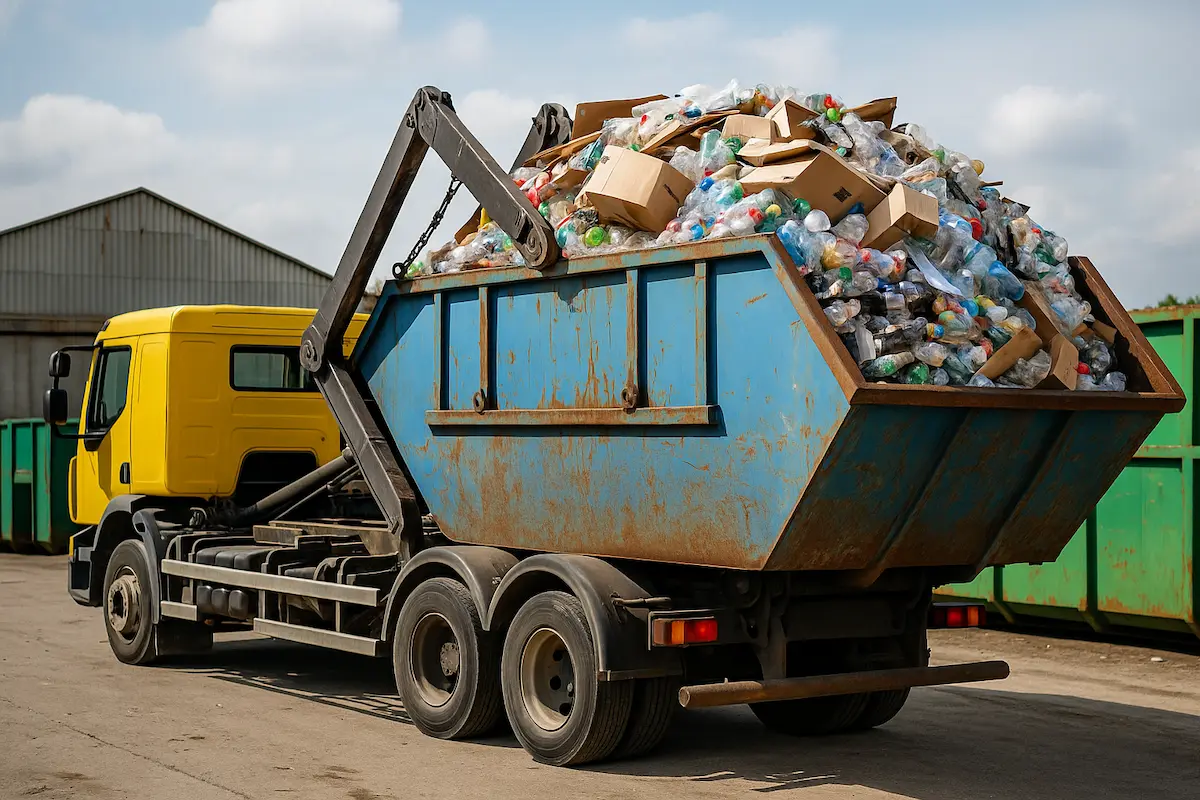
Integration of RORO Services Into Recycling Programs (Ops Field Notes)
Direct answer (40–60 words)
Integration of RORO services into recycling programs works when the site treats recycling like a logistics lane, not a goodwill activity: map waste streams, set a RORO bin recycling workflow, control contamination at the loading point, and lock pickup scheduling into production rhythms. Stability comes from simple ownership rules and fast resets when drift starts.
Quick answer
Most small factories fail on two things: “who checks the load” and “when the bin gets swapped.” Without those, source separation programs drift back to mixed waste—especially during shift changes and rain bursts that ruin paper quality.
A workable approach is to keep the workflow boring: clear stream separation, a short loading checklist, and recycler handoff requirements that are visible where the bin is actually filled—not in a forgotten SOP folder.
1) The Setup
A typical scenario: a small factory with an attached warehouse tries to integrate recycling into existing RORO movements without disrupting production.
Constraints that shaped the plan:
- Limited yard space and turning radius for lorries; bins can’t be shuffled endlessly.
- Shift changes create inconsistent segregation habits.
- Rain bursts and humidity damage cardboard/paper and invite contamination.
- Legacy “just throw it in the bin” behaviour, especially near end-of-day clearing.
- Pickup timing must not interrupt loading bays.
Scope boundaries:
- Focused on non-scheduled recyclables and general residue flows (not hazardous/scheduled waste).
- No legal advice; destination acceptance rules vary by recycler/MRF and site controls.
- No pricing, no provider recommendations—only operations.
2) Day 1–2: early drift signals
The first two days weren’t disasters. They were “almost fine,” which is how drift gets a foothold.
Early drift signals we logged:
- The “temporary bag” becomes permanent. A sack of mixed plastics sits beside the bin “just for now” and quietly turns into the default.
- Cardboard goes soft. Humidity and sudden rain bursts make cartons soggy; people still load them because they look recyclable from far away.
- Food residue shows up in the wrong lane. Pantry waste finds its way into “recyclables” because it’s lighter and easier to toss.
- Overflow triggers mixing. When the yard looks messy, someone clears the area by pushing borderline items into the nearest bin.
- No one owns the last 30 seconds. At the point of loading, everybody assumes someone else checked. That’s where contamination control recycling fails.
- Pickups are negotiated on the fly. Recycling pickup scheduling happens ad-hoc and suddenly the lorry is waiting while the site scrambles.
The pattern was consistent: the program didn’t collapse from ignorance. It leaked from small decisions made under time pressure.
3) Day 3: the reset decisions
Day 3 was the first “reset”—not a big overhaul, just a few decisions that removed ambiguity.
Reset decisions that held (with trade-offs):
- One bin = one primary stream (no “mostly recyclables”).
Trade-off: Sometimes the bin “looked underfilled” and people felt it was inefficient.
Why it held: It reduced grey-area dumping and made recycler handoff requirements easier to meet. - A single checkpoint at the point of loading.
Trade-off: Slightly slower during peak clearing moments.
Why it held: It created clear ownership for checks and reduced re-sorts later. - Define “wet cardboard” as residue unless reprocessed.
Trade-off: Some staff felt bad “throwing away recyclables.”
Why it held: Wet paper/cardboard often causes rejection or downgrades at MRF intake; keeping it out protects the rest of the load. - Simple waste stream mapping on-site.
Trade-off: Required a short walk-through and a few uncomfortable conversations (“this always ends up here”).
Why it held: It exposed where mixed waste vs recyclables actually blended (not where people thought it blended). - Pickups tied to operational windows, not convenience.
Trade-off: Less flexibility for last-minute calls.
Why it held: The loading bay stopped being interrupted, and swaps became predictable.
This is where the program stopped being “a recycling effort” and became a logistics routine.
4) Week 1: what kept it stable
Week 1 was about cadence, ownership, and triggers—small things that keep drift from becoming a new normal.
What kept it stable:
- A fixed rhythm for swaps. Not rigid to the minute, but consistent enough that the yard didn’t reach panic mode.
- Shift handover included two checks: bin lid closed (rain risk), and “grey area” bag count (a drift proxy).
- A named owner for each stream (not a department). When ownership is vague, drift hides in “everyone.”
- A short feedback loop with the destination. When a load was downgraded or questioned, the site logged the reason in plain language and adjusted one step—not ten.
- Trigger-based escalation: if overflow appeared, the response was “add a temporary staging area” instead of “mix it to clear the area.”
- Documentation for recycling loads stayed minimal but consistent: what stream, roughly how it was prepared (loose loading vs baling), and what went wrong if anything was rejected.
By the end of the week, staff didn’t need motivation. They needed fewer decisions to make.
5) Failure modes & small fixes
These are the common failure modes we see when integrating RORO services into recycling programs—plus the smallest fix that usually works.
1) The “grey area” pile grows beside the bin
What it looks like
A corner of “not sure” items accumulates until someone dumps it into whatever bin is available.
What usually causes it
Unclear acceptance rules; staff avoid making the “wrong” choice.
Smallest fix that works
Create a “hold for review” container with a 24–48 hour rule: items must be resolved quickly or treated as residue.
2) Wet loads contaminate otherwise good recyclables
What it looks like
Cardboard and paper go in damp; the load smells musty, looks clumped.
What usually causes it
Bins left open; rain bursts; storage near wash areas.
Smallest fix that works
Add a “close lid” step at shift end and move paper staging under cover. If it’s already wet, keep it out of the clean stream.
3) Plastics are “recyclable” in theory, rejected in practice
What it looks like
Mixed plastics loaded together; recycler asks for re-sort or rejects.
What usually causes it
Treating all plastics as one category; ignoring recycler handoff requirements.
Smallest fix that works
Split into a practical subset the site can sustain (e.g., “clear bottles only” vs “mixed plastics”), and label the rest as residue unless a reliable route exists.
4) End-of-day clearing causes last-minute mixing
What it looks like
Yard looks clean, but loads become mixed waste vs recyclables.
What usually causes it
Time pressure and a “clear the area” mindset.
Smallest fix that works
Set a rule: “clean yard” cannot be achieved by changing stream definitions. Provide a temporary overflow lane.
5) No one owns the loading check, so contamination slips through
What it looks like
Everyone assumes someone else checked; later, the destination flags contamination control recycling failures.
What usually causes it
Shared responsibility without a named checkpoint.
Smallest fix that works
Assign one role per shift to do a 30-second top-layer check before the bin is closed or swapped.
6) Pickup timing disrupts production flow
What it looks like
Lorry arrives during loading bay peak; forklifts and people pause operations.
What usually causes it
Recycling pickup scheduling done ad-hoc.
Smallest fix that works
Lock swaps to low-conflict windows. If that’s impossible, pre-stage access routes and keep turning movements predictable.
In day-to-day ops, it’s worth confirming where swaps can be supported so the cadence stays predictable.
7) The site can’t explain why loads are rejected
What it looks like
Rejections feel random; staff stop trying.
What usually causes it
No simple tracking of what went out and what changed.
Smallest fix that works
One-page log: stream, condition (dry/wet), loading method (baling vs loose loading), and the rejection reason if any.
6) Decision Tree (IF/THEN)
- IF the item is wet/food-contaminated THEN keep it out of recyclables (treat as residue unless a dedicated wash/process exists).
- IF the item is “recyclable” but the destination acceptance rules are unclear THEN move it to “hold for review” (24–48 hour rule).
- IF the yard is overflowing THEN open a temporary staging lane NOT a “mix it to clear” lane.
- IF pickup will disrupt loading bays THEN reschedule to the next low-conflict window, or pre-clear access routes and turning space first.
- IF cardboard/paper is stored in a humidity/rain-risk zone THEN relocate under cover before it touches the bin.
- IF staff are unsure between two streams THEN default to the stricter stream (protect the clean lane).
- IF the load is mostly “light packaging” with mixed polymers THEN keep it separate and confirm if the recycler/MRF wants it baled or rejected.
7) Topic-Specific Mini Checklist
- Check the top layer for obvious contamination (food residue, wet paper, liquids).
- Confirm the stream label matches what’s actually inside (no “mostly recyclables”).
- Ensure cardboard/paper is dry and stored under cover before loading.
- Remove “grey area” items into the review container (don’t decide under pressure).
- Verify loading method expectations (baling vs loose loading) for that stream.
- Confirm access route and turning radius are clear for the lorry.
- Align swap timing with the agreed operational window (avoid loading bay peaks).
- Note any drift triggers seen today (overflow, wet loads, shift handover gap).
- Close and secure lids if rain is likely; keep water out of the stream.
- Log the load in one line (stream + condition + any exceptions).
FAQs
Start by mapping the waste streams you actually produce (not what you hope you produce), then match each stream to a realistic bin workflow and destination acceptance rules. Most issues come from “grey area” items and wet/contaminated loads at the point of loading.
Keep it simple: one primary stream per bin, a defined checkpoint at loading, and pickup timing aligned to low-conflict operational windows. Add a fast “hold for review” lane so uncertainty doesn’t become contamination.
Contamination (food residue, wet paper), mixed materials that the destination won’t accept, and inconsistent preparation. Even when items are recyclable in theory, recycler handoff requirements and MRF intake rules can be stricter in practice.
Assign a single 30-second check at the point of loading. Pair it with a small “review container” for uncertain items. This prevents re-sorts later, which usually cost more time than the quick check.
Behaviour—especially during shift changes. Signage helps, but ownership and routines matter more: who checks, when bins are closed, and what happens during overflow.
Treat dryness as a quality requirement. Store under cover, keep bin lids closed, and avoid loading wet material into the clean stream. If paper/cardboard is already wet, it often downgrades or contaminates the load.
It depends on the recycler/MRF and the material type. Baling can improve handling and reduce volume, but only if the site can keep material clean and consistent. Loose loading may be workable for some streams but increases mixing risk if discipline slips.
Operationally, it’s about protecting the clean lane. Once mixed waste behaviours enter the recycling stream—wet items, food residue, random plastics—sorting effort shifts downstream, and rejection risk rises.
Tie swaps to defined windows that avoid loading bay peaks. If production rhythms vary, use triggers (bin fullness, staging limits) to call swaps early rather than waiting for overflow emergencies.
Remove decision pressure. Give a clear “hold for review” option, define a few strict defaults (wet/dirty stays out), and make the workflow easier than the shortcut. Most “just throw it” moments happen when the yard is messy or time is tight.
Acceptance can vary due to market demand, contamination levels, processing capacity, and where the load is going next (direct recycler vs MRF). Treat acceptance rules as changeable inputs and keep a quick feedback loop so the site adjusts without rewriting everything.
Look for operational signals: fewer urgent yard cleanups, fewer “grey area” piles, cleaner handoffs with fewer re-sorts, and fewer disputes about what goes where. A simple log of issues and rejections often reveals more than numbers early on.