
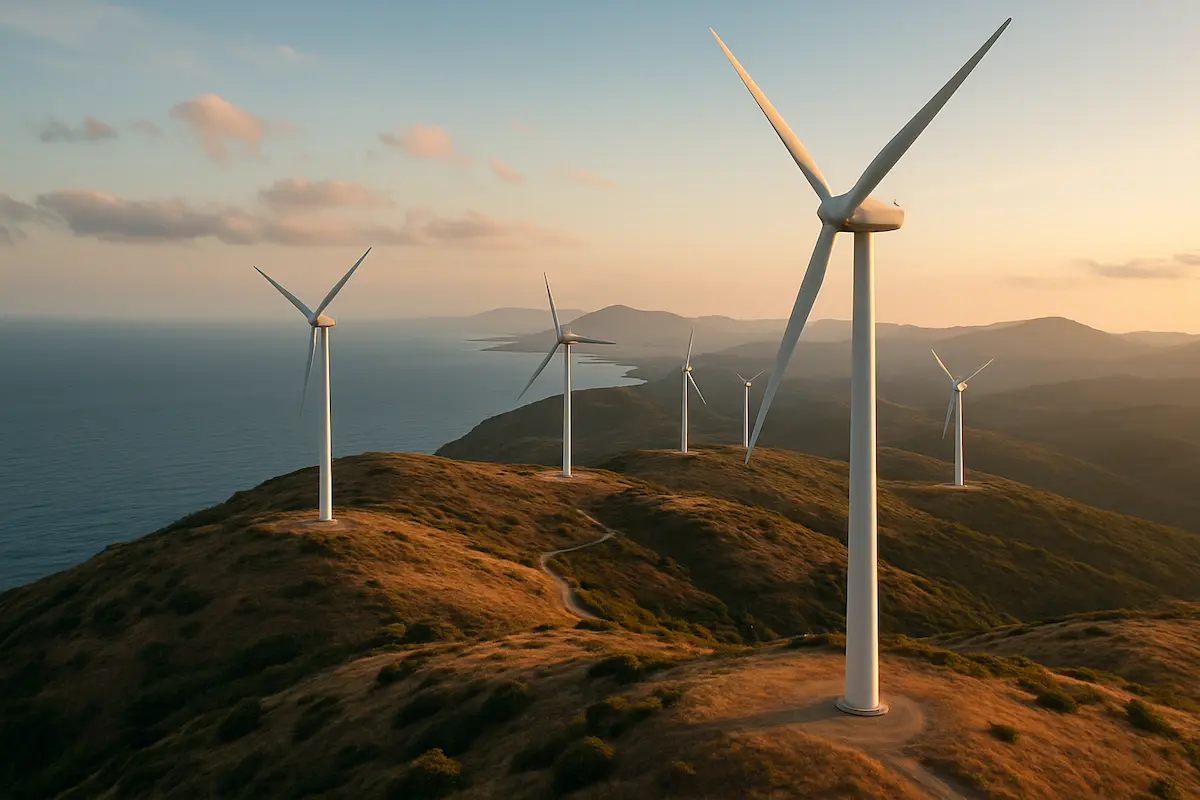
Wind Turbines in Hill & Coastal Communities
Introduction to Wind Energy
Wind energy is one of the fastest-growing renewable power sources in the world. It harnesses the natural movement of air to generate electricity, providing a clean, sustainable alternative to fossil fuels. As global demand for energy rises, communities in hilly and coastal regions are turning to wind turbines as a reliable source of power.
Why Wind Energy Matters Today
In a world battling climate change, wind energy offers a carbon-free solution. Unlike coal or gas, wind power doesn’t produce harmful greenhouse gases. It’s also an abundant and renewable resource, available virtually everywhere the wind blows.
How Wind Turbines Work
Wind turbines convert kinetic energy from the wind into mechanical power. The turbine blades spin when the wind blows, turning a rotor connected to a generator. This movement creates electricity that can power homes, businesses, and even entire towns. You can read more about how a typical wind turbine works on Wikipedia’s explanation of Wind Turbines.
Why Hills and Coastal Areas Are Ideal for Wind Turbines

Understanding Wind Patterns in Elevated Regions
Hills and mountains create natural wind corridors. The higher elevation allows for stronger, more consistent winds, which means more efficient energy production.
The Constant Breeze of Coastal Zones
Coastal areas are perfect for wind energy because of the continuous air pressure differences between land and sea. During the day, warm air rises from the land, and cool sea air moves in to replace it, creating a steady breeze ideal for turbines.
Balancing Topography and Wind Flow
Engineers carefully study wind maps and topography before installing turbines. Proper placement ensures maximum exposure to prevailing winds and minimizes turbulence caused by uneven landscapes.
Caption: A stunning view of wind turbines harnessing sea breezes along Portugal’s coastal hills.
Types of Wind Turbines Suitable for Hills and Coasts
Horizontal-Axis Wind Turbines (HAWTs)
These are the most common turbines seen worldwide, with large blades that face the wind. They are highly efficient and ideal for open, breezy coastal plains or elevated ridges.
Vertical-Axis Wind Turbines (VAWTs)
Unlike traditional turbines, VAWTs capture wind from any direction. They are more compact and better suited for rugged hillsides or small-scale community projects.
Hybrid and Micro Wind Systems
For smaller communities, hybrid setups combining wind with solar panels can ensure steady energy supply, even during calm weather periods.
Environmental Benefits of Wind Turbines
Reducing Carbon Emissions and Air Pollution
Wind turbines produce zero emissions during operation. Each megawatt-hour of wind-generated power replaces a significant amount of CO₂ that would otherwise come from fossil fuels.
Supporting Renewable Energy Goals
Countries like Portugal and Denmark rely heavily on wind energy to reach their clean energy targets, setting examples for others to follow. Many homeowners in Portugal are also combining wind energy with home solar systems to maximize renewable power production. If you’re exploring solar options as well, here’s a useful breakdown of solar panel costs in Portugal to help you compare both technologies.
Economic Advantages for Local Communities
Job Creation and Local Investments
Wind farms bring jobs in construction, maintenance, and engineering. Many communities see a boost in local employment during both installation and operation phases.
Lower Energy Bills and Energy Independence
By producing their own power, towns can reduce electricity costs and avoid reliance on national grids or imported fuels.
Tourism and Eco-Friendly Branding
Some coastal regions use wind farms as part of their eco-tourism appeal, showcasing sustainable living and innovation.
Challenges of Installing Wind Turbines in Hill & Coastal Areas
Difficult Terrain and Construction Costs
Building on uneven or steep terrain requires special foundations and heavy machinery, which increases costs.
Environmental Concerns and Noise Issues
Wind turbines can affect bird migration patterns and generate low noise levels, which some nearby residents may find intrusive.
Visual Impact and Community Acceptance
While many view wind farms as symbols of progress, others consider them visual clutter in scenic landscapes. Education and community engagement help overcome resistance.
Engineering and Design Considerations
Choosing the Right Turbine Size and Blade Type
Larger turbines capture more wind but require more space and structural support. Smaller models are ideal for villages and hill communities.
Foundation and Stability on Sloped Terrain
Engineers use reinforced concrete bases and smart anchoring systems to ensure turbines remain stable even in strong winds.
Coastal Corrosion and Weather Resistance
In salty coastal environments, turbines are coated with anti-corrosive materials and sealed to prevent damage from humidity and sea spray.
Case Studies: Successful Wind Projects Around the World

Portugal’s Coastal Wind Farms
Portugal’s Atlantic coast has become a wind powerhouse, producing clean energy and reducing the country’s carbon footprint.
Scotland’s Highland Wind Parks
Scotland uses its rugged terrain to host efficient wind parks that power thousands of homes sustainably.
Offshore Wind Farms in Denmark
Denmark pioneered offshore wind farms, setting global standards for coastal wind technology and innovation.
Caption: Offshore wind farms demonstrate how coastal communities capture renewable energy from consistent ocean winds.
How Communities Can Benefit from Shared Wind Projects
Community-Owned Wind Cooperatives
Groups of residents can pool resources to build and manage local turbines, sharing profits and lowering energy bills.
Public-Private Partnerships
Governments and private firms often collaborate on large-scale wind projects, ensuring shared investment and responsibility.
Educational and Awareness Programs
Teaching locals about renewable energy encourages support and helps the next generation embrace sustainability.
The Future of Wind Energy in Hill and Coastal Areas
Technological Innovations
New designs such as bladeless turbines and modular floating platforms are expanding wind’s reach.
AI and Smart Grid Integration
AI helps predict wind patterns and optimize energy storage, reducing waste and improving efficiency.
Offshore Floating Wind Farms
Floating platforms allow turbines to operate in deeper waters, tapping into stronger, more consistent offshore winds.
Government Policies and Incentives
Tax Credits and Subsidies
Many countries offer tax breaks or grants for installing wind turbines, making renewable projects more financially viable.
Zoning and Environmental Regulations
Proper planning ensures turbines don’t disrupt wildlife or natural habitats.
EU and Global Renewable Energy Targets
Wind energy plays a central role in meeting global net-zero goals, with increasing international cooperation driving growth.
How to Get Started with Small-Scale Wind Energy at Home
Assessing Local Wind Potential
Homeowners can use online wind maps or hire professionals to evaluate local wind conditions.
Choosing a Residential Turbine
Compact turbines designed for rooftops or small gardens can supply a portion of household electricity.
Installation and Maintenance Tips
Proper installation and regular inspections ensure safety, performance, and long-term durability.
Conclusion
Wind turbines in hill and coastal communities represent a powerful step toward sustainable living. By harnessing nature’s free energy, these regions reduce carbon emissions, cut costs, and boost local economies. Despite challenges like terrain and cost, innovation continues to make wind energy more accessible and efficient. The future is bright—and windy—for communities willing to embrace clean energy.
FAQs
Modern designs are much quieter than older models, producing only a soft whooshing sound comparable to rustling leaves.
Depending on size and location, one turbine can power anywhere from a few homes to an entire village.
Proper site planning and modern radar systems help reduce wildlife impacts significantly.
Yes, many compact residential turbines are available for homeowners in windy regions.
Most systems are connected to grids or hybrid setups that store energy or switch to backup sources during calm periods.